Autism Room Setup: Tips and Ideas for Classrooms
Learn how to set up an autism-friendly room with tips on visuals, sensory tools, and organization.
Key Points:
- Setting up an autism room requires attention to sensory needs, organization, and behavior management.
- An effective autism classroom setup supports structure, learning, and emotional regulation.
- ABA therapy can be an effective tool in autism classrooms, helping students develop key skills.
Creating an autism-friendly classroom environment is essential for supporting the development of students with autism spectrum disorder (ASD). This is because, according to research, about 42% to 88% of individuals with autism experience sensory processing impairments. With the right setup, however, students can thrive, feeling comfortable, engaged, and ready to learn—fostering autism progress in both academic and social skills.
An autism room setup isn’t just about the physical space but also about creating an atmosphere that addresses sensory sensitivities, promotes structure, and provides clear boundaries. These elements are key to helping children with autism stay focused, manage their behavior, and learn effectively.
Whether it’s using visual schedules, sensory tools, or creating calming spaces, there are many strategies that can foster success.
What are the Key Components of an Effective Autism Room Setup?
An effective autism room setup incorporates several essential components that can enhance both learning and emotional regulation. These elements will help create a space where children feel comfortable and supported, ensuring that they are set up for success. Some of the most important features include:
Clear Boundaries and Structure
Children with autism thrive in structured environments with clear expectations. Setting up specific zones for different activities (such as learning, quiet time, and sensory activities) helps students know what to expect and where to go for different tasks.
Sensory Support
Many children with autism have sensory sensitivities, so it’s essential to integrate sensory tools and spaces. This could include calming objects, noise-canceling headphones, or a designated area for relaxation.
Visual Supports
Visual supports such as schedules, signs, and labels help children with autism understand the routine and expectations. These tools can reduce anxiety and help students follow instructions more easily.
Accessible Learning Tools
Ensuring that learning materials are organized and easy to access is key for children with autism. Use clear bins, labeled folders, and shelving units that are within the child’s reach.
Materials like visual aids, manipulatives, and interactive tools can help foster independence while supporting learning. These tools can also be tailored to meet the specific needs and strengths of the child, enhancing engagement and comprehension.
Quiet and Calming Space
Many children with autism can become overwhelmed in highly stimulating environments. A designated quiet area equipped with soft lighting, calming visuals, and comfortable seating provides a retreat when children need to reset.
This space helps them regulate their emotions, reducing the likelihood of meltdowns and encouraging self-soothing. The quiet space should be easily accessible but separate enough to provide a sense of peace away from other activities.
Positive Reinforcement System
Children with autism respond well to positive reinforcement when they meet goals or follow directions. Incorporating a rewards system within the room can motivate children to engage in tasks and behaviors.
This could include a visual chart tracking progress, a token system, or a reward box with preferred activities. Clear incentives help children understand expectations and feel a sense of accomplishment when they meet them.
With these factors in mind, let’s explore each of them in more detail, along with tips and ideas for creating a functional and comfortable autism room setup.

How to Organize the Autism Room for Maximum Learning
Proper organization plays a key role in helping students with autism stay engaged and manage sensory inputs. A well-organized classroom helps reduce distractions and ensures that children know where things are and what to expect during the day. Here are some practical ideas for organizing the autism room:
Designate Specific Zones for Activities
Having a clear distinction between areas for learning, sensory breaks, and individual or group work will help students know where they should focus on specific tasks. You could create a reading nook, a sensory corner, and a work table. Use dividers, rugs, or tape on the floor to mark these areas clearly.
Incorporate Minimalistic Décor
Overstimulating visuals or clutter can distract children with autism and make it difficult for them to focus. Keep decorations simple and purposeful, using muted colors and minimal wall art. Choose calming visuals that are relevant to the activities at hand, and avoid excessive use of bright, busy patterns that could overwhelm the sensory system.
Organize Materials with Clear Labels
Label everything. Organize classroom materials in bins, drawers, or shelves with clear, easily visible labels or pictures. This makes it easier for children to understand where materials are kept and encourages independence in locating resources.
Incorporate Technology to Support Learning
In today’s classrooms, technology can be an effective tool for helping children with autism engage in learning. Whether it’s through interactive tablets, educational apps, or communication devices, using technology in an organized way can facilitate learning and offer children personalized educational experiences. Make sure that tech devices are easily accessible and used in a structured manner to avoid distractions.
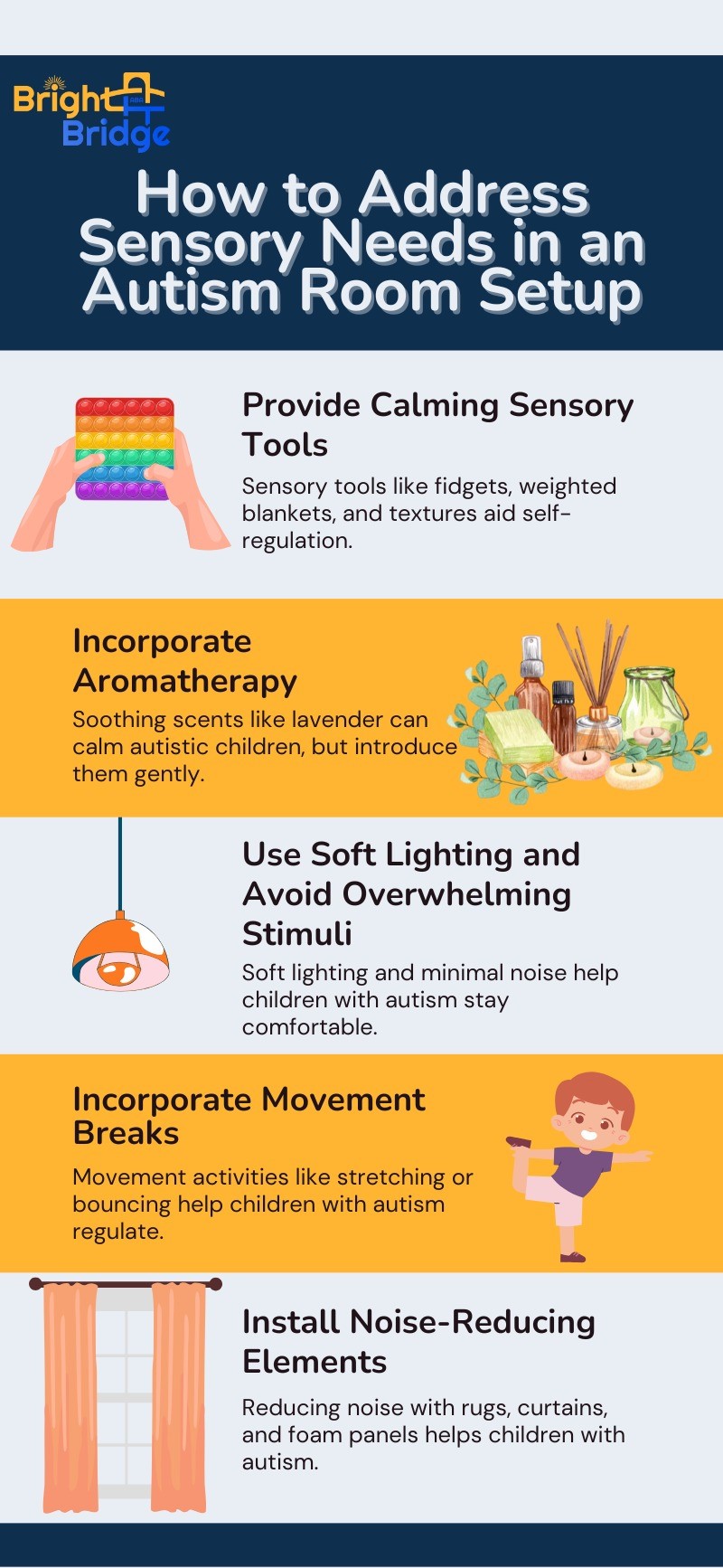
How to Address Sensory Needs in an Autism Room Setup
Sensory needs are a central consideration when setting up an autism room. Many children with autism experience heightened or diminished sensitivity to sensory input, which can make classroom environments overwhelming or understimulating. Here are a few ideas for addressing sensory needs:
How to Manage Behavior and Reinforce Positive Skills
Managing behavior in the classroom requires a strategic approach that emphasizes positive reinforcement and clear expectations. Children with autism often respond well to structured routines and behavior interventions. Here are a few ideas to support positive behavior:
Use Social Stories for Teaching Appropriate Behavior
Social stories are a great way to teach children with autism appropriate social behaviors and coping mechanisms for different situations. These stories describe a social situation and outline expected behaviors, helping children understand the context of specific interactions. By reviewing social stories regularly, children can better navigate social challenges and improve their responses to various scenarios.
Implement “First, Then” Strategy
The “First, Then” strategy provides clear expectations by breaking tasks into manageable steps. For example, you might say, “First, you clean up your toys, then you can play with the blocks.” This approach helps children understand what needs to be done before they are rewarded with something they enjoy. It also minimizes frustration by simplifying tasks and providing clarity.
Clear and Consistent Expectations
Children with autism benefit from understanding what is expected of them. Establish rules and expectations early in the school year and refer to them regularly. Use visual reminders or social stories to reinforce classroom expectations. Consistency is key for helping students with autism thrive in the classroom.
Support for Autism Classrooms in North Carolina, South Carolina, New Mexico, Virginia, Arizona, and New Jersey
If you’re in North Carolina, South Carolina, New Mexico, Virginia, Arizona, or New Jersey and looking for ways to support students with autism in the classroom, BrightBridge ABA offers professional ABA therapy services. Applied Behavior Analysis (ABA) is an evidence-based approach that has been shown to improve communication, social skills, and behavior management for children with autism.
BrightBridge ABA works with schools and families to create individualized therapy plans tailored to each child’s needs. Whether it’s through one-on-one support or group sessions, our team provides targeted interventions that can be integrated into the classroom setting. By using ABA principles, children can develop the skills necessary for success in school and beyond.
Contact BrightBridge ABA in North Carolina, South Carolina, New Mexico, Virginia, Arizona, and New Jersey to learn how ABA therapy can improve your classroom environment and help your students with autism thrive. Whether you’re a teacher or a parent, we are here to provide the support you need for a more structured, supportive, and effective learning experience.
Ready to get started?
Contact us today to learn how ABA therapy can help your child reach their full potential.
Contact Us Today